There is a quiet but important shift happening in Nigeria’s aviation landscape—one that is not driven by noise or spectacle, but by structure, discipline, and a renewed sense of purpose.
For too long, conversations around air travel in Nigeria have oscillated between aspiration and frustration. Aspiration, because the country holds enormous potential as a regional aviation hub. Frustration, because that potential has not always translated into consistent passenger experience, operational confidence, and global competitiveness.
But change, when it comes, rarely announces itself with fanfare. It begins with intent.
At the heart of this shift is a growing recognition that being proudly Nigerian must also mean being globally aligned. The two are not in conflict; rather, they are increasingly inseparable. National identity is no longer measured only by ownership or geography, but by standards—how well we meet them, and how consistently we sustain them.
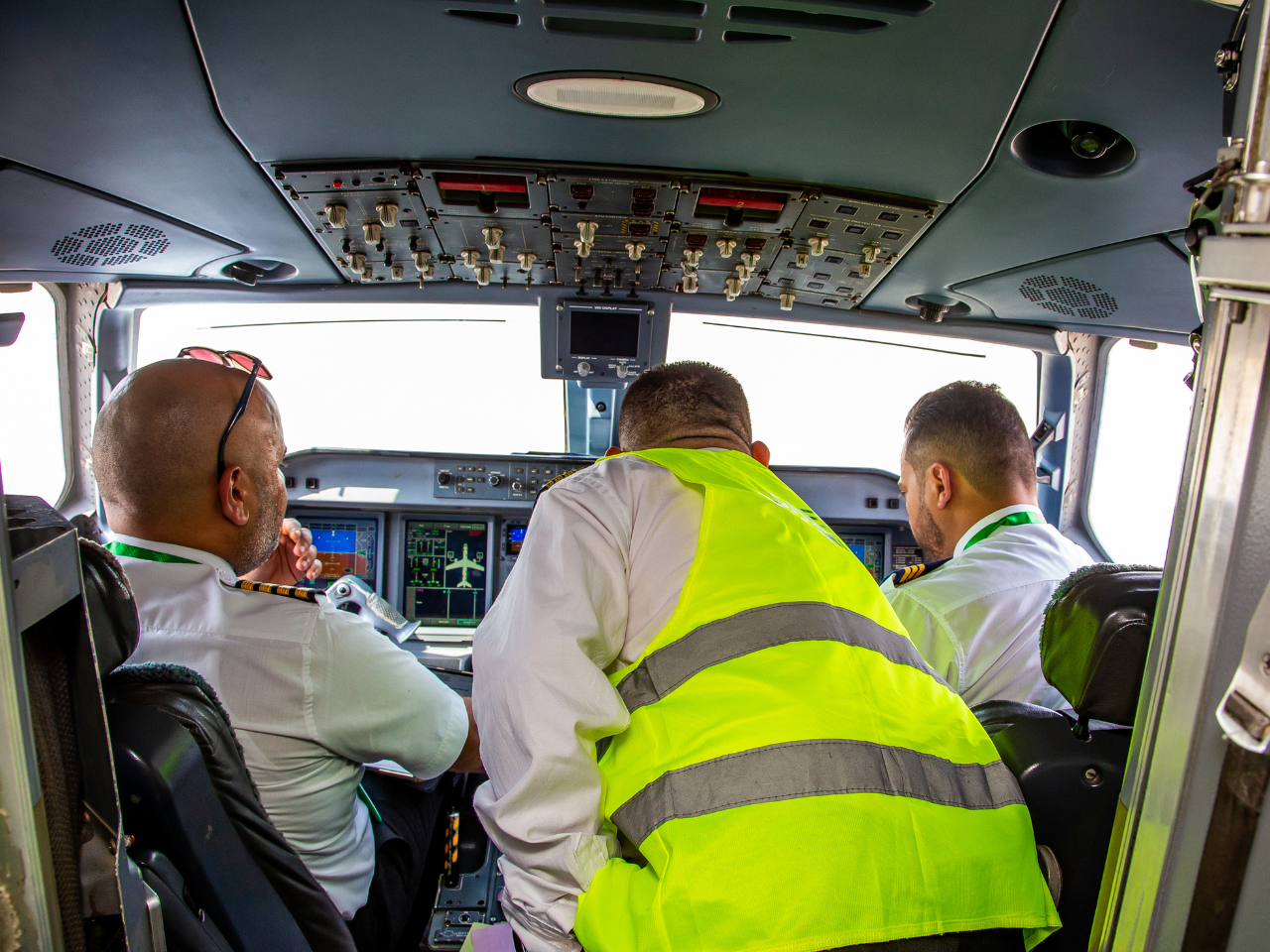
In aviation, standards are not abstract ideals. They are lived realities: safety protocols observed without compromise, crew trained not only to perform but to anticipate, and systems designed to function seamlessly under pressure. They are the quiet disciplines that passengers may never see, but always feel.
Leadership in this sector, therefore, carries a particular responsibility. It is not enough to enter the market. The real question is: what standard are you raising?
For emerging carriers, this moment represents more than expansion—it is a test of philosophy. Do we compete by lowering expectations to match constraints, or do we elevate our operations to meet the expectations of a globalised traveller who has seen what excellence looks like elsewhere?
The answer, increasingly, is clear.
There is a deliberate move towards embedding global best practices into every layer of airline operations—from training and safety culture to customer experience and operational efficiency. Not as a borrowed template, but as a benchmark adapted to local realities and national ambition.
This is where the true meaning of “globally aligned” becomes evident. It is not about imitation. It is about integration—taking internationally recognised standards and making them work within a Nigerian context without dilution.
Equally important is the question of identity. “Proudly Nigerian” is not a branding slogan; it is a responsibility. It means proving that excellence does not have an address. It can be built, sustained, and exported from here. It means demonstrating that Nigerian aviation professionals can meet and exceed global expectations when given the right structure, training, and institutional discipline.
The future of air travel in Nigeria will not be defined by isolated successes, but by consistency. By airlines that understand that trust is earned flight after flight, decision after decision, standard after standard.
As the sector evolves, leadership will increasingly be judged not by ambition alone, but by execution. Not by what is promised, but by what is proven in the air, on the ground, and behind the scenes.
And so the message remains simple, but demanding: to be proudly Nigerian in aviation today is to be relentlessly committed to global standards. Anything less is no longer enough.