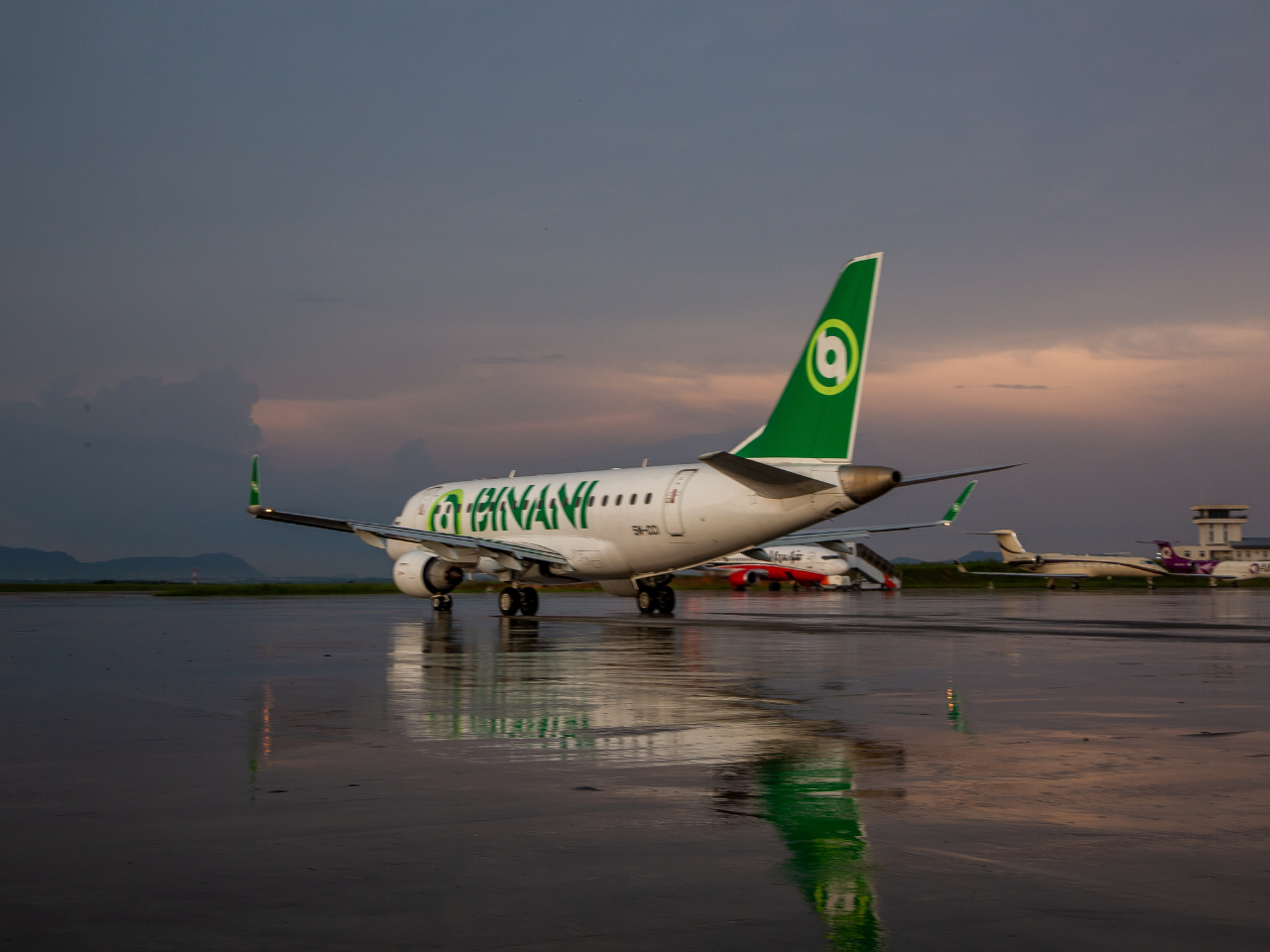
In an industry where ambition often collides with harsh realities, the birth of a new airline in Nigeria is rarely a simple story of investment and launch dates. It is, more often, a test of endurance—of systems, of people, and of belief.
For the team behind Nigeria’s newest airline BINANI AIR, the journey to takeoff has been anything but straightforward.
What began as a bold vision—to redefine the experience of domestic air travel—quickly met the familiar turbulence of the aviation sector. Regulatory hurdles, infrastructure limitations, fluctuating economic conditions, and the painstaking process of certification formed an early gauntlet. Each stage demanded not just compliance, but precision.
Behind the scenes, months turned into years of groundwork. Aircraft acquisition was only one part of the equation. Building a credible airline meant investing heavily in people—training crew to meet global safety standards, instilling operational discipline, and creating a culture where attention to detail is non-negotiable.
There were moments when progress slowed to a crawl. Industry insiders note that obtaining an Air Operator Certificate (AOC) alone can stretch even the most prepared organisations. It is a process designed to scrutinise every aspect of an airline’s readiness—from safety protocols to financial sustainability. For BINANI AIR, that scrutiny became both a challenge and a defining experience.
Yet, those closest to the project insist the delays were not setbacks, but necessary refinements.
“The idea was never just to fly,” one member of the operational team explains. “It was to build something that people can trust.”
That sense of purpose appears to have shaped key decisions along the way. Rather than rushing to market, the airline focused on strengthening its internal systems—ensuring that when operations begin, they are not only compliant, but consistent.
Industry observers say this approach could prove significant in a market where passenger confidence is closely tied to reliability and safety. Nigeria’s aviation sector has seen its share of disruptions over the years, making trust a valuable currency.
There is also a broader ambition at play. Beyond commercial success, the airline’s leadership has spoken about contributing to national connectivity—linking cities more efficiently and supporting economic activity across regions. In a country where air travel remains a critical bridge, that vision carries weight.
Still, the road to this point has required more than strategy. It has demanded resilience.
Staff recall long hours, repeated simulations, and continuous audits. Teams revisited procedures, refined training modules, and reworked timelines. Each adjustment brought them incrementally closer to a singular goal: readiness.
Now, as the airline edges toward its inaugural flight, what stands out is not just the milestone itself, but the journey behind it. A journey defined by persistence in the face of uncertainty, and a refusal to compromise on standards.
For passengers, the first flight will mark the beginning of a new option in the skies. For those who built it, it represents something deeper—a transition from vision to reality.
And in an industry where shortcuts are quickly exposed, that journey may ultimately be what earns them the confidence they seek.